The Hidden Price Tag on Outfit Doubt — And How to Stop Paying It

Photo: PattayaPatrol, CC BY-SA 4.0, via Wikimedia Commons
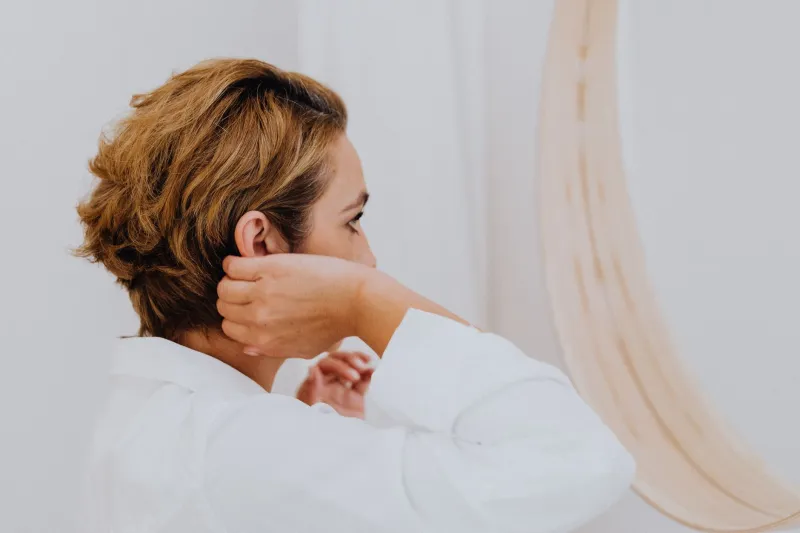
It starts before you even leave the house. You've changed twice already. You're standing in front of the mirror doing that thing where you tug at the hem, turn sideways, second-guess the shoes, and ultimately walk out the door still not sure. The outfit is fine. But fine doesn't feel great, and you carry that low-level uncertainty with you into your morning.
What happens next is subtle but real: part of your brain stays on the outfit. You wonder if you should have gone with the other top. You catch your reflection in a store window and reassess. You're physically present in your meetings, but a sliver of your mental bandwidth is running a background process called did I get dressed correctly today.
This is the confidence tax. And almost nobody is calculating what it's actually costing them.
The Time Bill Nobody Sends You
Let's start with the most concrete cost: time. Research from the British clothing brand Matalan found that the average woman spends about 17 minutes getting dressed each morning — but that jumps significantly on days marked by indecision. Across a year, the time lost to outfit uncertainty adds up to what researchers in behavioral economics call decision fatigue overhead: the hidden time tax of choices that should be automatic but aren't.
For a lot of people, that looks like 15 to 20 extra minutes several days a week. That's not nothing. Over the course of a year, compounded outfit indecision can eat up the equivalent of entire workdays — time that could have gone to sleep, to breakfast, to actually arriving somewhere without that low hum of stress.
High-performing people — from Barack Obama's famous gray suit rotation to Steve Jobs' black turtleneck uniform — have long understood this. Reducing outfit decisions doesn't mean giving up style. It means protecting cognitive bandwidth for the things that actually require it.
What You're Buying When You're Not Sure What You're Buying
Outfit insecurity has a particularly expensive downstream effect that doesn't show up until you check your credit card statement: impulse purchasing.
Here's how the cycle typically runs. You feel uncertain about your wardrobe. That uncertainty generates a vague but persistent anxiety that something is missing. You scroll Instagram, see a look you like, and feel a brief hit of clarity — that's what I need. You buy something. The clarity lasts about a week before the uncertainty returns, and the cycle starts again.
The problem is that most impulse purchases made from a place of style anxiety are solving the wrong problem. They're treating a confidence issue like an inventory issue. Your closet doesn't have a gap — your relationship with what's already in it does. No new purchase fixes that. Which is why research on consumer behavior consistently shows that people with lower clothing confidence report higher rates of buyer's remorse and lower satisfaction with their wardrobes, even when they own more.
A 2022 survey by ThredUp found that Americans collectively spend billions on clothes they never wear. A significant driver of that waste? Purchasing from a place of insecurity rather than intention.
The Social and Professional Costs Are Real Too
This is where things get a little more uncomfortable to sit with, but the data is worth knowing.
Studies on enclothed cognition — a term coined by researchers Hajo Adam and Adam Galinsky — demonstrate that what we wear doesn't just signal to others how we feel; it actually shapes how we feel and perform. Participants in their research who wore a lab coat described as a doctor's coat performed measurably better on attention tasks than those told the same coat belonged to a painter. The clothing changed their internal experience of competence.
Applied to everyday dressing: when you're uncertain about your outfit, you're not just mildly uncomfortable. You're potentially operating with a reduced sense of authority, presence, and confidence — and those things show up in how you carry yourself in a job interview, a first date, a networking event, or a tough conversation with a colleague.
This isn't about wearing expensive clothes or following trends. It's about wearing things you've made a genuine decision about. Conviction in your clothing creates a kind of psychological coherence that uncertainty actively disrupts.
The Emotional Labor Nobody Counts
Beyond time and money, there's a third cost that's harder to quantify but arguably the most draining: emotional labor.
Constant second-guessing about your appearance is a form of low-grade stress that accumulates. It contributes to what psychologists call self-monitoring — the ongoing, effortful process of evaluating how you're being perceived. High self-monitors expend more energy in social situations, experience more anxiety, and report lower overall satisfaction with their self-presentation.
The antidote isn't to stop caring about how you look. It's to shift from reactive self-monitoring to proactive style confidence — knowing before you leave the house that you've made a decision you can stand behind, so you can spend the rest of your day on literally anything else.
How to Actually Build Outfit Conviction
None of this is fixed by buying a capsule wardrobe or following a color theory chart. Genuine clothing confidence is built through experience and iteration. Here's what actually moves the needle:
Wear things more than once before judging them. A lot of outfit anxiety comes from wearing something for the first time and not yet knowing how to move in it, style it, or read the room with it. Give pieces three wears before you decide they don't work.
Document what works. (See: the mirror selfie habit.) When you wear something and feel good, note it. Over time, you build an evidence base that your gut can reference when the doubt starts creeping in.
Pre-decide your outfits. Decision fatigue is real. Laying out tomorrow's outfit the night before removes the morning uncertainty spike almost entirely. You've already made the choice in a calmer mental state — morning-you just has to execute.
Stop dressing for an imaginary audience. A huge source of outfit insecurity is dressing for a vague, unnamed group of people whose opinions you've never actually asked for. Get specific about who you're actually going to be around and what you actually want to communicate. The imaginary critics quiet down fast when you give them less abstract power.
The confidence tax is real, but it's also optional. You don't have to keep paying it.