Color Psychology Lied to You: What Actually Lifts Your Mood When You Get Dressed

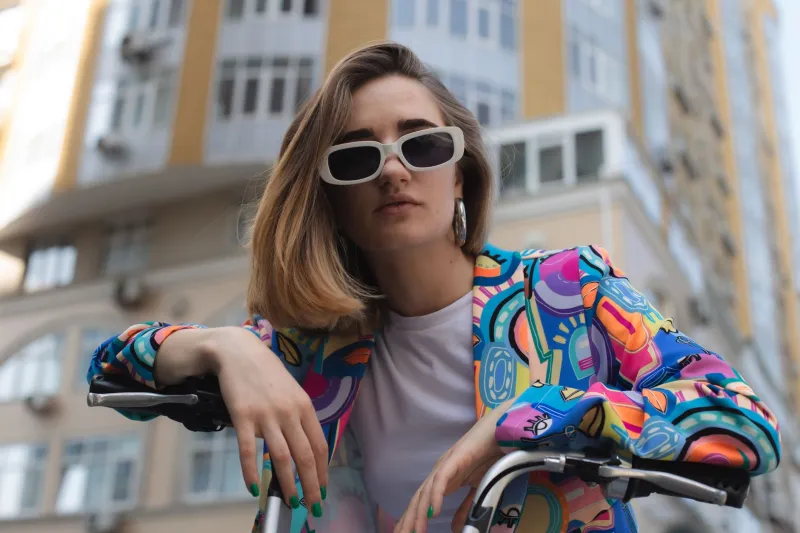
Somewhere between a pandemic and a collective identity crisis, the fashion world handed us a solution: dopamine dressing. Wear bold colors. Reach for that neon green blazer. Feel joy. Simple, right?
Except it's not. Not even close.
The term got everywhere — Vogue ran it, TikTok ran with it, and suddenly every brand from Target to Nordstrom was marketing saturated hues as a form of emotional self-care. But here's the thing: the neuroscience behind dopamine dressing is shakier than a stiletto on cobblestones. And if you've ever worn a cheerful yellow dress while feeling absolutely terrible, you already know that.
So what's actually happening when certain outfits make you feel like yourself — or don't? Let's get into it.
The Dopamine Myth, Unpacked
Dopamine is a real neurotransmitter. It's involved in reward, motivation, and pleasure. But here's what the viral trend glossed over: dopamine doesn't fire because you put on a red sweater. It fires in response to anticipation and reward — which means it's way more tied to context, memory, and expectation than it is to a color swatch.
Dr. Dawnn Karen, a fashion psychologist who's been doing actual academic work in this space for years, has talked about how clothing affects mood through a much more complex web of factors — including what she calls "enclothed cognition," a term coined by researchers Hajo Adam and Adam Galinsky. Their 2012 study found that wearing a lab coat made people perform better on attention tasks — but only when they believed it was a doctor's coat. The same coat described as a painter's smock? No effect.
Translation: it's not the garment. It's the meaning you assign to it.
What's Really Going On in Your Brain
When you reach for something in your closet and feel that little lift — that quiet "yes, this" — what's actually happening is a cocktail of memory, identity, and sensory feedback.
Memory association is huge. That olive-green jacket might make you feel confident not because green is a power color, but because you wore it the day you got a promotion, or on a first date that went really well. Your brain has filed it under "good things happen when I wear this." It's Pavlovian, basically.
Fit and physical comfort matter more than color. Multiple studies on body image and clothing suggest that physical discomfort — waistbands that dig in, fabrics that scratch, shoes that pinch — creates a low-grade stress response that colors your entire mood. Meanwhile, something that fits your actual body right now, that moves with you, signals safety to your nervous system. That's not a small thing.
Identity alignment is the real driver. When what you're wearing matches how you see yourself — or who you're trying to be that day — there's a coherence that feels good. It's less about dopamine and more about cognitive dissonance. Wearing something that feels "off" creates friction. Wearing something that feels you removes it.
The Bright Color Thing Isn't Totally Wrong — Just Oversimplified
Here's where we give credit where it's due: color does influence mood, but the relationship is deeply personal and culturally shaped. In the US, white is often associated with freshness and clarity. But it's also the color of mourning in several East Asian cultures. Red reads as power and passion in many Western contexts, but it's also a color of luck and celebration in others.
Within your own personal color history, certain shades probably do lift you. But it's not universal. Research suggests that contrast and saturation can increase visual alertness — which might explain why wearing something more vivid feels like a jolt. But alertness isn't the same as happiness. And happiness isn't the same as feeling good in your clothes.
Jamila, a 34-year-old Chicago teacher who shared her experience with us, put it perfectly: "I went all-in on bright colors last year because of the dopamine dressing thing. Bought a bunch of stuff I wouldn't normally wear. I felt like I was wearing a costume. The clothes I actually feel good in are neutrals and soft textures — they feel like me. The yellow blazer just made me anxious."
So What Should You Actually Reach For?
If you want to dress for a better mood — and that's a totally valid goal — here's what the evidence actually supports:
Wear things that fit your body today. Not your body from three years ago. Not your aspirational body. The one you have right now. Clothes that fit create physical ease, and physical ease translates to emotional ease. It's that straightforward.
Lean into your personal meaning system. Think about what you've worn on your best days. What did those pieces have in common? Texture? Silhouette? A specific color family? That's your actual data set, not a trend report.
Consider your sensory profile. Some people are highly sensitive to fabric. Scratchy wool, stiff denim, anything too tight around the collar — these things create a subtle but real drain on your energy. If you're a sensory-sensitive person, comfort might matter more to your mood than color ever will.
Use novelty strategically. Wearing something new or unexpected can create a mood lift — but again, it's about the anticipation and the signal it sends to yourself, not the color itself. A new pair of earrings, a scarf you've been saving, even a fresh outfit combination can create that "treat yourself" effect without requiring a full neon wardrobe overhaul.
The Bigger Picture
Dopamine dressing isn't evil. As a concept, it nudged people toward being more intentional about what they wear and how it makes them feel — and that's genuinely good. But when it gets flattened into "bright colors = happy brain," it misses the deeply personal, contextual, and psychological reality of why clothes matter to us.
Your wardrobe isn't a prescription pad. It's a reflection of your identity, your history, and your sensory preferences. The pieces that actually make you feel good aren't necessarily the boldest ones — they're the ones that fit, that feel right, and that say something true about who you are on any given day.
That's worth way more than a viral trend.