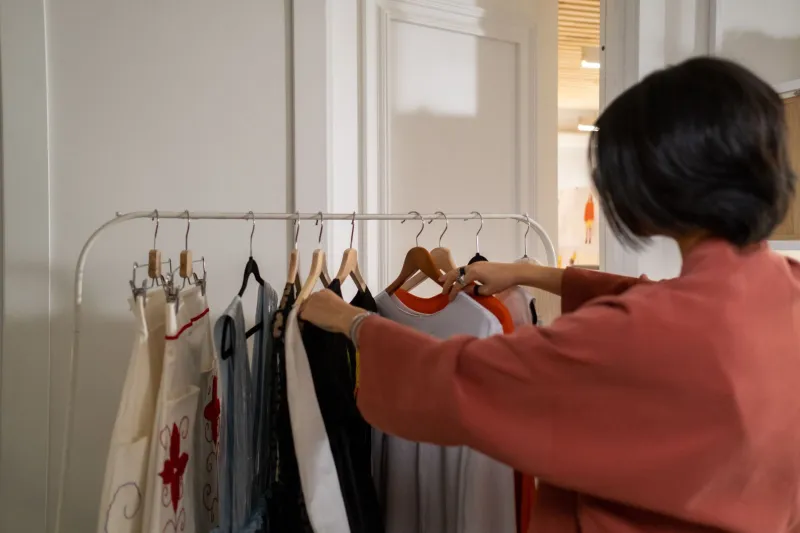
The Clothes You Actually Wear Are Telling You Something Your Favorites Won't

The Outfit That Shows Up Every Week (Even When You Ignore It)
You know that one pair of pants. The slightly worn-in ones you grab without thinking, stuff into your bag after the gym, wear to the grocery store, and somehow end up in on a Tuesday work call. You don't pin them to mood boards. You don't post them. You might not even technically like them. But they're on your body more often than anything else in your closet.
Now think about the dress hanging near the front — the one you bought because it felt like you, the aspirational you, the one who has somewhere interesting to be on a Wednesday night. How many times have you worn it in the last three months?
That contrast? That's your style data. And it's more honest than anything you've ever saved on Instagram.
Why Your Favorites and Your Most-Worn Pieces Are Rarely the Same Thing
Here's the uncomfortable truth: the clothes we love most often live in a fantasy version of our lives. We buy them for the dinner party, the girls' trip, the first date energy. They're aspirational purchases — which isn't inherently bad. But when those pieces sit unworn while you cycle through the same five reliable outfits, the disconnect starts to cost you. Closet space, money, and the daily frustration of staring at a full rack feeling like you have nothing to wear.
Comfort and practicality are quiet but powerful forces in real-world dressing. Your brain is making micro-decisions every morning — how much time do I have, what's the weather, how much walking am I doing, do I need to feel pulled-together or just functional? The clothes that win those daily negotiations are the ones that actually fit your life as it is, not as you imagine it.
The gap between your favorites and your most-worn pieces isn't a failure of taste. It's a mismatch between your real routine and the wardrobe you've built around a different one.
The Two-Week Outfit Audit (It's Easier Than It Sounds)
You don't need an app or a spreadsheet — though both work great if you're into that. All you need is two weeks and a willingness to pay attention.
Every day, take a quick photo of your outfit before you leave the house. At the end of the two weeks, scroll back through. Look for the patterns:
- What did you reach for most? Specific colors, silhouettes, fabrics?
- What never made an appearance? That's your aspirational pile.
- When did you feel best in what you were wearing? Not most dressed-up — best. Comfortable, capable, like yourself.
- Were there days you felt off? What were you wearing?
Two weeks is enough time to get past the anomalies (the wedding weekend, the unexpected cold snap) and see your actual dressing habits. Most people are surprised. The woman who thought she was a maximalist discovers she gravitates toward a muted palette. The person convinced they hate basics finds out they wear a white tee literally every other day.
What the Data Actually Means
Once you have your two-week picture, you're looking for two things: your real style signatures and your real lifestyle demands.
Real style signatures are the things that show up repeatedly without you consciously choosing them. Maybe it's always a sleeve. Maybe it's always a heel, even a low one. Maybe you never once wore a tucked-in top. These are your actual preferences — the ones your body has been voting for all along while your brain was busy pinning something else.
Real lifestyle demands are the practical truths your wardrobe has to work around. If you're commuting on the subway, doing school pickup, sitting at a desk for eight hours, or spending weekends at outdoor farmers markets, your clothes need to meet you there. Not the other way around.
The most useful thing the audit does is show you where those two things overlap — and where they don't. If your style signature is structured blazers but your lifestyle is constant movement and casual Fridays, you need blazers that flex. If you love flowy linen but you're always cold, you need layers that don't wreck the silhouette.
Using Your Audit to Shop Smarter (Finally)
Here's where the self-knowledge actually pays off. When you know what you genuinely reach for, you stop buying things that only work in your imagination.
Before your next purchase, run it through three quick questions:
- Does this fit my real lifestyle? Not a fantasy version — the one you actually lived last Tuesday.
- Does it match my actual style signatures? If your audit showed you never once wore a print, that bold floral is a risk.
- Does it work with what I already reach for? The best additions slot into your existing rotation without requiring a whole new outfit ecosystem around them.
This doesn't mean you can never buy something aspirational. It means you go in with eyes open. Maybe you buy the statement piece anyway — but you buy one, not three. And you don't let it crowd out the pieces that are genuinely working for you.
The Closet That Matches Your Actual Life
There's a version of your wardrobe that doesn't make you feel guilty every time you open it. One where the most-worn pieces are also the ones you feel good in, because you've built it around who you actually are rather than who you're planning to become.
That version starts with honesty. With looking at the evidence your own habits have already collected and taking it seriously.
Your closet isn't a vision board. It's a tool. The outfit audit just helps you figure out what kind of tool you actually need — and stop buying hammers when your life is full of screws.
Two weeks. A few photos. That's all it takes to stop guessing and start dressing with real clarity.