Why a Stuffed Closet Still Leaves You Staring at Nothing to Wear
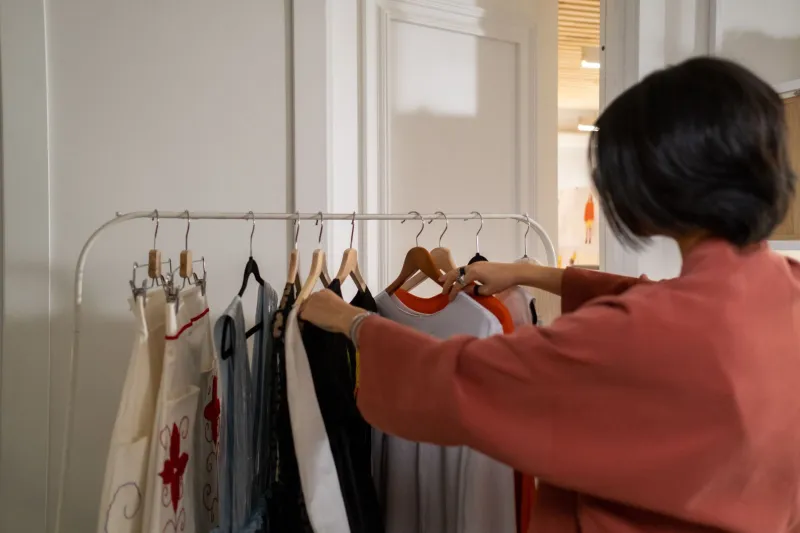
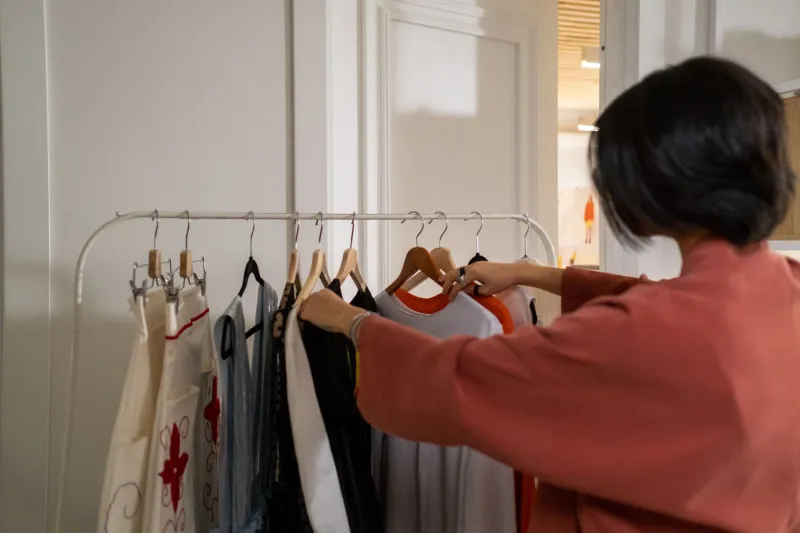
There's a specific kind of frustration that hits when you're running late, your closet is literally overflowing, and you still can't pull together a single outfit you actually want to wear. It feels irrational. It feels embarrassing. And it is, genuinely, one of the most common wardrobe problems out there — affecting people across every budget, every style, every closet size.
The thing is, this isn't a volume problem. You don't need more clothes. You need to understand why the ones you already own aren't functioning as a system. That's what a real outfit audit is about — not just pulling stuff out and making a donate pile, but actually diagnosing the root causes of a closet that looks full and feels useless.
Let's get into it.
The Accumulation Trap
Most of us build wardrobes reactively. A sale here, a trend there, a birthday gift that wasn't quite right but felt wasteful to return. Over time, you end up with a collection of individual pieces rather than a cohesive wardrobe — and those are two very different things.
A collection is stuff you own. A wardrobe is stuff you wear.
The gap between the two is where the "nothing to wear" feeling lives. When you're standing in front of your closet in the morning, you're not actually looking for clothes — you're looking for combinations. And if your pieces don't connect to each other, no amount of individual items will solve that.
Before you touch a single hanger, the first step in your audit is a mindset shift: stop evaluating pieces in isolation. Start asking whether each item has actual partners in your closet.
The Fabric Quality Check You're Probably Skipping
Here's something most decluttering guides skip entirely: fabric quality is one of the biggest reasons clothes go unworn. Not because you consciously reject them, but because your body does.
Pills, rough textures, fabrics that cling in the wrong places, materials that wrinkle the second you sit down — these create what stylists call wearing friction. You put something on, it doesn't feel right, you change. You do that enough times and eventually you just stop reaching for it.
Go through your closet and actually touch everything. Run your hand over it. Hold it up to the light. Ask yourself: does this fabric make me feel good when I wear it, or do I spend the whole day adjusting it? If the answer is the latter, that piece is taking up real estate without earning it.
This is especially worth doing with basics — the t-shirts, the tanks, the everyday trousers. These are the items that should be your highest-use workhorses, and they're often where people spend the least, which means they're frequently the first to create friction.
Proportion Mismatches: The Silent Outfit Killer
You can own a beautiful top and beautiful pants and still have nothing to wear — because proportion is everything, and most of us don't think about it consciously until something looks off and we can't figure out why.
Proportion mismatches happen when the silhouette of one piece fights the silhouette of another. A super-voluminous blouse paired with wide-leg pants can look intentional and editorial, or it can look like you're being swallowed whole — the difference is usually in whether you have the right pieces to balance it.
During your audit, pull out anything you own but never wear and actually try it on. Then ask: what would I need to wear with this to make it work? If the answer is something you don't own, that's useful information. It tells you either to fill that gap intentionally or to let the piece go.
Common proportion pitfalls to look for:
- Tops that are too cropped or too long to work with the bottoms you actually own
- Statement pieces that require specific footwear you don't have
- Layering pieces (blazers, jackets, cardigans) that don't fit over your actual shirts
The Psychological Friction Points Nobody Talks About
Some clothes don't get worn because of something quieter than quality or proportion — they don't get worn because of how they make you feel. Not physically, but emotionally.
Maybe it's the dress you bought for a version of your life you don't actually live. The going-out top from five years ago that still technically fits but belongs to a different era of who you were. The "aspirational" pieces you bought hoping they'd motivate you toward something — a goal, a lifestyle, an aesthetic — that just never materialized.
These pieces aren't broken. They're just not yours anymore, or maybe they never really were.
During your audit, pay attention to any subtle resistance you feel when you touch certain items. That low-level "ugh" response is data. It's your intuition telling you that piece creates more friction than function in your life right now. You don't have to justify it with logic — you're allowed to let things go simply because they don't feel like you.
Building a Wearability Map
Once you've gone through your closet with fresh eyes — checking fabric, proportion, and emotional resonance — it's time to get practical. The goal is to identify what you actually have to work with versus what's just taking up space.
Try this: pull out everything you've worn in the last 30 days and lay it out together. That's your active wardrobe. Everything else is in a kind of limbo.
For the limbo pieces, sort them into three groups:
- Fixable — good piece, wrong context. Maybe it needs tailoring, maybe it needs a styling partner you don't own yet. These are worth keeping if you're actually going to address the issue.
- Situational — pieces for specific occasions that genuinely come up in your life. Keep these, but store them separately so they're not cluttering your daily decision-making.
- Dead weight — pieces that don't fit, don't feel good, don't connect to anything else, or just aren't you. These go.
The point isn't to minimize your wardrobe for minimalism's sake. It's to make your closet legible — so when you open it, you can actually see your options clearly.
The Real Fix
A stuffed closet that leaves you feeling stuck isn't a shopping problem or a storage problem. It's a clarity problem. You've accumulated without a framework, and now the sheer volume of stuff is working against you instead of for you.
The outfit audit isn't a one-time purge — it's a way of learning to see your wardrobe as a system that either functions or doesn't. Once you start thinking that way, you'll shop differently, keep things differently, and get dressed a whole lot more easily.
And honestly? That's the whole point. Getting dressed should feel like an expression of who you are — not a daily battle with your own closet.