Where Did That Outfit Go? The Fix for Forgetting Your Best Looks

Photo by Photo by Vitaly Gariev on Unsplash on Unsplash
You remember the day vividly. You walked out the door feeling completely put-together, got a compliment at work, felt like yourself in a way that doesn't happen every morning. And then — somewhere between that Tuesday and the next time you stood in front of your closet — the outfit just... disappeared. Not the clothes. The combination. The exact proportion of pieces, the specific tuck, the layering order that made it click.
This isn't a you problem. It's an extremely common and almost completely overlooked friction point in the way most people interact with their wardrobes. Let's call it outfit amnesia, and it's quietly undermining your style more than any trend miss ever could.
Why Your Brain Doesn't Bookmark Great Outfits
Here's the thing about memory: it's not a filing cabinet. It's more like a highlight reel that your brain edits based on emotional intensity and repetition. A great outfit moment might feel memorable in the moment, but unless something dramatic happened — a first date, a big presentation, a photo that got saved — your brain has very little reason to store the specific details of what you wore.
Cognitive psychologists call this encoding failure. You experienced the outfit, but you never intentionally committed it to memory. There was no deliberate mental note taken. So the next morning when you're rushing and half-awake, that winning combination isn't retrievable — not because it wasn't good, but because it was never properly filed.
Add to that the sheer volume of micro-decisions we make every day (the average American adult makes somewhere around 35,000 decisions daily, according to researchers at Cornell), and it makes complete sense that "what I wore three Thursdays ago that worked really well" doesn't make the cut.
The Passive vs. Intentional Outfit Problem
Most of us dress passively. We grab, we assess, we adjust, we leave. The outfit either works or it doesn't, and we move on. This is fine for getting out the door, but it's terrible for building a style that compounds over time.
Intentional outfit-building is different. It means treating the combinations you land on — especially the ones that genuinely work — as information worth keeping. Think of it less like getting dressed and more like running a small experiment. When something lands, you want to record the result.
Stylists do this automatically, because their job depends on it. A stylist working with a client doesn't just dress them once and hope they remember. They document. They build references. They create a living archive that makes every future session smarter than the last. You can do the exact same thing for yourself — and it doesn't require a spreadsheet or a personal assistant.
The Mirror Selfie You're Not Taking
The lowest-effort outfit documentation method is also the most obvious: take a photo before you leave. Not for Instagram. Not for anyone else. Just for you.
This is genuinely one of the most underrated style habits you can build. A mirror selfie takes about eight seconds, and over time it becomes an incredibly useful personal lookbook — a scrollable archive of every combination that cleared the bar. On mornings when you're drawing a blank, you're not starting from zero. You're scrolling back through actual evidence of what works on your actual body in your actual life.
A few tips to make this actually useful:
- Keep them in a dedicated album. On your iPhone, you can create a custom album called "Outfits" or "Looks That Work" and move photos there as you go. Google Photos lets you do the same.
- Add a quick note if you want context. Even just "wore this to a client dinner, felt great" in the caption or a notes app entry gives future-you useful metadata.
- Don't curate too hard. The point isn't aesthetic perfection. A slightly blurry mirror pic that captures the full look is more useful than a beautifully lit photo that cuts off your shoes.
Outfit Mapping: The Slightly More Structured Approach
If you want to go a level deeper, outfit mapping is worth trying. This is essentially a visual index of your wardrobe combinations — and it doesn't have to be complicated.
Start by photographing your individual pieces (or pulling images from the retailer's site if you want something cleaner). Then, when you land on a combination you love, you create a simple collage or mood board grouping those pieces together. Apps like Stylebook or even a Pinterest board set to private work well for this.
The real payoff of outfit mapping isn't just remembering combinations. It's pattern recognition. When you can see your successful outfits laid out together, you start noticing things. Maybe that one olive jacket shows up in six of your ten best looks. Maybe every outfit you feel confident in has a clear focal point and a neutral base. These are insights you'd never arrive at through passive dressing — and they make future outfit-building dramatically faster.
The Weekly Outfit Reset Habit
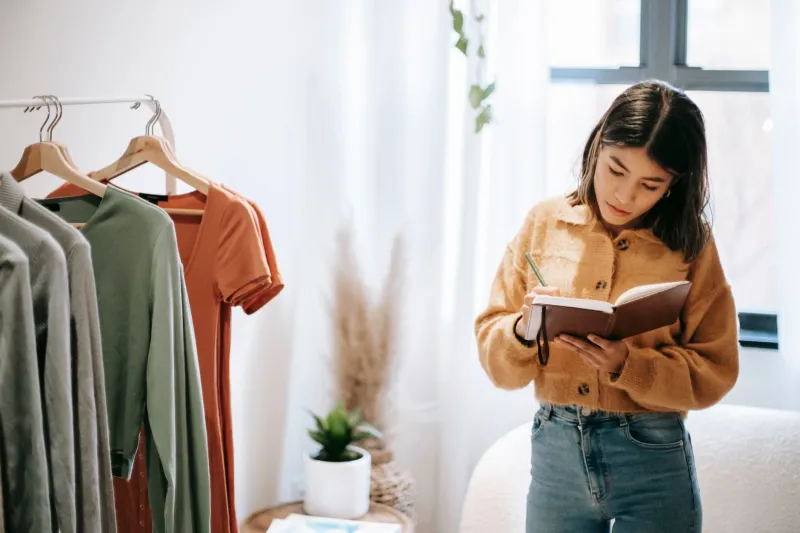
One of the simplest systems to prevent outfit amnesia doesn't require any apps or albums at all. It's a five-minute weekly habit: at the end of each week, think back to the one outfit you wore that felt the best. Just one. Write it down somewhere — a notes app, a dedicated journal, a sticky note on your closet door.
Over a month, you have four reference points. Over a year, you have a genuinely useful style diary that reflects your real life, your real body, and your real taste — not a Pinterest board of aspirational looks that have nothing to do with your actual Tuesday morning.
Your Best Outfits Are Already in Your Closet
Here's the reframe that makes all of this feel worth the effort: the best outfits you'll ever wear are probably already hanging in your closet right now, just waiting to be remembered. You don't need to shop your way out of outfit amnesia. You need to build a better memory.
Start small. Take the mirror selfie today. Create the album this week. You're not building a fashion archive for clout — you're building a reference library for the person who has to get dressed tomorrow morning and deserves to feel good doing it.