When the Mirror Lies: Diagnosing Why You Felt So Wrong in That Outfit
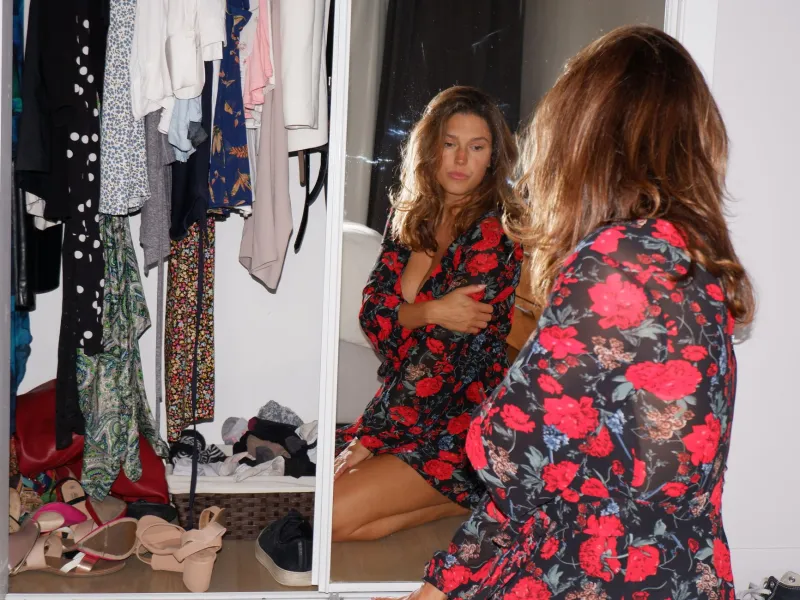
You know that feeling. You got dressed, checked the mirror, thought okay, this works — and then spent the entire day tugging at your waistband, avoiding your reflection in store windows, and wishing you'd worn literally anything else. By the time you got home, you were ready to donate the whole outfit.
But here's the thing: the clothes probably didn't do anything wrong.
Outfit discomfort is real, but it's almost never just about the garment. It's a layered experience — part physical, part psychological, part circumstantial — and most of us never stop to untangle it. We just blame the jeans and move on. That's a mistake, because it means we keep getting dressed the same way and keep feeling the same way, without ever fixing the actual problem.
Let's break it down.
The Micro-Fit Problem Nobody Talks About
Fit is the big one, but probably not in the way you're thinking. We tend to notice obvious fit issues — something's too tight, too long, falling off our shoulders. What we miss are the micro fit problems: the slight pull across the upper back that only shows up when you sit down, the waistband that sits just a quarter inch too high, the sleeve that's technically the right length but somehow binds when you reach forward.
These tiny misalignments don't look wrong in a mirror. They feel wrong in motion. And because they're subtle, your brain doesn't immediately clock "this doesn't fit" — it just registers a low-level physical irritation that builds into full-on outfit dread by noon.
The fix here is actually wearing clothes before you commit to them in public. Not just standing in a fitting room — actually sitting, walking, reaching, crossing your arms. If anything pulls, rides, or shifts in those movements, that's data.
The Story You're Telling Yourself About the Outfit
This is where it gets a little more uncomfortable to admit.
Sometimes the outfit isn't the problem. The story you've attached to it is. Maybe you bought those wide-leg trousers because you wanted to be the kind of person who wears wide-leg trousers — effortless, editorial, a little European. But if that's not how you actually move through the world right now, your body will betray that gap every time you wear them. You'll feel like you're in costume.
Clothes don't just cover us. They communicate something — to other people, yes, but mostly to ourselves. When the message an outfit sends doesn't match the internal story we're living, we feel it as dissonance. That "off" feeling isn't the outfit failing you. It's your gut telling you the outfit is aspirational, not authentic. At least not yet.
Neither version is wrong. Dressing aspirationally can be genuinely powerful. But it works best when you're consciously choosing it, not when you're confused about why you feel weird.
Context Mismatch Is Quietly Ruining Outfits
Here's a scenario: you wore an outfit last fall to a dinner with friends and felt incredible. You wore the exact same outfit last Tuesday to run errands and felt frumpy and overdressed. The outfit didn't change. The context did.
We underestimate how much environment shapes our experience of what we're wearing. An elevated blazer feels powerful in a meeting and costumey at a farmer's market. A flowy sundress feels breezy on vacation and somehow wrong in your home city on a random Wednesday. This isn't a flaw in your wardrobe — it's just context sensitivity.
If you find yourself repeatedly feeling off in an outfit, it's worth asking: where did I wear this when it didn't work? Sometimes the answer is that the piece itself is fine, it's just contextually specific. You don't need to get rid of it. You need to stop wearing it to the wrong places.
The Confidence Variable
You cannot separate how you feel going into getting dressed from how you feel once you're dressed. It sounds obvious, but most of us don't actually account for it.
On a day when you're already anxious, tired, or in your head, even your best outfit can feel wrong. Your nervous system is primed for discomfort and it will find it — in the way the fabric moves, in a perceived tightness that wasn't there last week, in a sudden certainty that this color washes you out even though it never has before.
This is why you've probably had the experience of wearing the same outfit on two different days and feeling completely different each time. The outfit is a constant. You are the variable.
This doesn't mean you should push through feeling bad. It means you should stop diagnosing the clothes when the actual issue is your state of mind. On those days, the smartest thing you can do is reach for whatever feels like armor — your most comfortable, most familiar, most you pieces — rather than experimenting.
How to Actually Run the Diagnosis
Next time an outfit makes you feel off, try this before you write it off entirely:
Step 1: Locate the physical. Is there a specific place on your body where you feel uncomfortable? A waistband, a neckline, a sleeve? If yes, that's a fit or fabric issue. It's fixable — either by a tailor or by accepting that this particular item isn't for you.
Step 2: Check the story. Ask yourself honestly: does this outfit feel like me, or does it feel like who I want to be? There's no wrong answer, but knowing which one it is helps you understand the discomfort.
Step 3: Consider the context. Is this the right outfit for where you actually are today? Not where you wish you were going, not the version of your day you imagined when you got dressed — where you're actually going.
Step 4: Check in with yourself. Rate your general mood and confidence level on a 1-10 before you blame the outfit. If you're at a 4, the outfit might be a 9 that just doesn't stand a chance right now.
The Takeaway
Your clothes are not out to get you. Most of the time, when an outfit feels wrong, it's a clue about something beyond the fabric — a fit issue that needs addressing, a mismatch between aspiration and reality, the wrong environment, or simply a hard day.
The goal isn't to build a wardrobe that magically fixes all of that. It's to get clear-eyed enough about what's actually happening that you stop donating perfectly good clothes in a fit of frustration and start solving the real problem.
Once you know what you're actually diagnosing, getting dressed gets a whole lot easier.