Same Jeans, Different Day: The Hidden Forces That Make an Outfit Hit or Miss
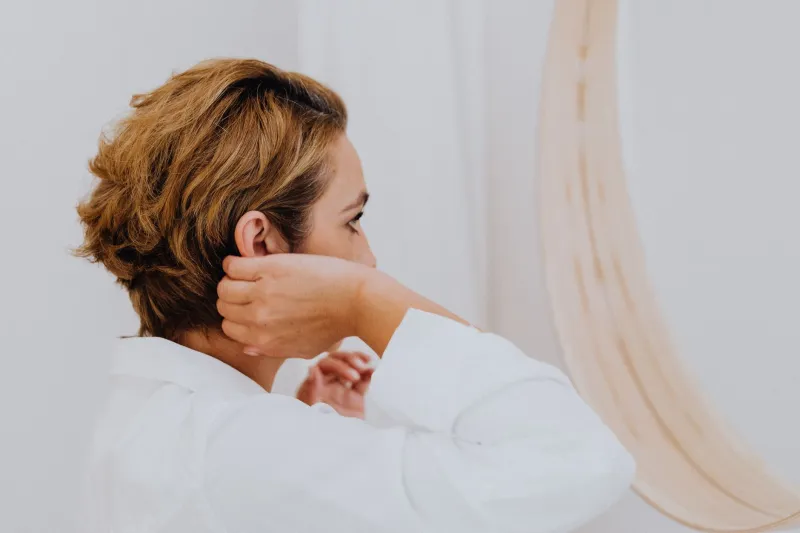
Here's a scenario that's probably happened to you more than once. You pull on the same blazer-and-denim combo that made you feel sharp and put-together last week. You look in the mirror. Something is... off. Not wrong exactly, but definitely not right. You haven't gained weight. You haven't changed your hair. The clothes are clean and unwrinkled. And yet, the whole thing feels like a costume instead of an outfit.
This is one of fashion's most frustrating mysteries — and it has almost nothing to do with your wardrobe.
Your Mood Is Basically a Filter Over Everything You See
Let's start with the obvious thing that nobody wants to admit: how you feel emotionally on any given morning rewires how you perceive yourself in the mirror. Psychologists call this affect-dependent perception — your emotional state literally changes how your brain processes visual information, including your own reflection.
When you're confident, well-rested, and mentally clear, your brain fills in the gaps generously. You notice what's working. When you're anxious, tired, or running on two cups of coffee and a bad night's sleep, your brain zooms in on every flaw. The outfit didn't change. Your internal lens did.
This is why stylists will tell you to never make a major shopping decision when you're feeling low. The same logic applies to outfit evaluation. An off day will make even your most reliable looks feel like they're failing you.
Lighting Is Doing More Work Than You Realize
Here's a technical factor that almost nobody accounts for: the lighting in your bedroom at 7 a.m. is not the lighting you'll be standing in all day.
Your bathroom's warm incandescent bulbs can make a dusty rose top look like a perfect blush. Step outside into harsh morning sunlight or into your office's fluorescent overhead lighting, and suddenly that same top reads washed out or weirdly orange. Colors shift. Textures flatten or pop unexpectedly. Shadows fall in places that change the silhouette entirely.
Fashion insiders know this, which is why serious stylists often use daylight-balanced lighting when building editorial looks. For regular humans, it helps to do a quick check near a window before finalizing your outfit — especially if color accuracy matters to you that day.
Your Posture Is the Difference Between Looking Styled and Looking Sloppy
This one stings a little, but it's worth saying: the way you're carrying your body dramatically changes how your clothes land.
That tailored jacket that looked polished last week? You were standing straight, shoulders back, chin level. Today you're hunched over your phone, shoulders rolled forward, and the whole structure of the jacket is collapsing around you. It's not the jacket's fault.
Clothes are designed — whether intentionally or not — to work with a specific posture. Structured pieces like blazers and button-downs are especially posture-dependent. Flowy silhouettes have a little more grace. But across the board, the way you inhabit your clothes has a massive impact on how they read.
The fix isn't to stand perfectly rigid all day. It's to notice. When something feels off, roll your shoulders back once and check again. You might be surprised how much the outfit improves without changing a single piece.
The Social Context You're Dressing For Changes Everything
An outfit doesn't exist in a vacuum. It exists in a setting, surrounded by other people, within a specific social context — and all of that context shapes whether the outfit works.
That floral midi skirt that felt effortlessly chic at a rooftop brunch might feel strangely overdressed at a casual team lunch. The sleek all-black look that made you feel powerful in a client meeting might feel somber and stiff at a friend's birthday dinner. The clothes are identical. The environment is doing the heavy lifting of making them feel right or wrong.
This is why experienced dressers think about occasion fit as a core part of outfit planning — not just aesthetic fit. It's not just "does this look good?" It's "does this look good here, with these people, for this purpose?" When those align, you feel amazing. When they don't, something feels vaguely off even if you can't name it.
The Confidence Feedback Loop (And How to Break It)
Here's where it gets a little circular. You feel uncertain about your outfit, so your body language becomes hesitant. That hesitant body language makes your clothes look less intentional. Which makes you feel more uncertain. Which makes your posture worse. And suddenly you're in a full spiral over a pair of pants that genuinely looked great three days ago.
The reverse is also true. When you feel good, you move differently. You make eye contact. You take up space. And clothes — literally any clothes — look better on someone who's moving through the world like they belong there.
This is the dirty secret of "style confidence" that nobody quite spells out: confidence isn't a reward you get after assembling the perfect outfit. It's an input that changes how the outfit performs.
One practical trick that stylists and performers have used forever: do a quick physical reset before you leave the house. Stand up straight. Take a breath. Do a slow once-over in the mirror from a neutral emotional state, not a panicked one. Give yourself the same generous read you'd give a friend.
When to Trust the Feeling and When to Override It
None of this means you should ignore your instincts. Sometimes an outfit genuinely isn't working — the proportions are off, the color isn't doing anything for you, the fit has changed. Those are real signals worth listening to.
But there's a difference between a style instinct and a mood spiral. A style instinct is specific: "This neckline isn't right with my hair up today." A mood spiral is vague: "I just look bad in everything."
If you can't name what's actually wrong with the outfit, there's a solid chance the outfit isn't the problem. Take that as useful information. Swap one element if it helps, then move on. Your clothes deserve a fair trial — not a verdict handed down by your 6:45 a.m. anxiety.
The Takeaway
Outfit success has never been purely about the clothes. It's about the light you're standing in, the posture you're holding, the room you're walking into, and the headspace you brought to the mirror that morning. Your most reliable pieces can feel like strangers on a bad day, and a thrown-together look can feel like a masterpiece when everything else is clicking.
The goal isn't to find perfect clothes. It's to understand the full picture — and give yourself a little more credit when the ecosystem is working against you.